Empowering Future Innovators: Teaching STEM Concepts Through VEX Robotics
In the ever-evolving landscape of education, one thing remains constant: the need to prepare our students for the future. As we stand on the cusp of the fourth industrial revolution, characterized by the fusion of digital, biological, and physical innovations, the importance of STEM education has never been more pronounced. Enter VEX Robotics – a dynamic platform that’s revolutionizing how we teach STEM concepts and nurture the next generation of innovators.
The STEM Imperative: Why It Matters
Before we dive into the world of VEX Robotics, let’s take a moment to understand why STEM education is crucial in today’s world:
1. Economic Growth: STEM fields are driving economic growth and innovation across the globe.
2. Job Market Demands: The job market increasingly demands STEM skills, even in non-traditional STEM roles.
3. Problem-Solving: STEM education fosters critical thinking and problem-solving skills applicable in all areas of life.
4. Innovation: STEM knowledge is essential for driving technological advancements and solving global challenges.
5. Digital Literacy: In our technology-driven world, STEM literacy is becoming as fundamental as reading and writing.
Given these imperatives, how do we make STEM education engaging, effective, and accessible? This is where VEX Robotics comes into play.
VEX Robotics: A Gateway to STEM Learning
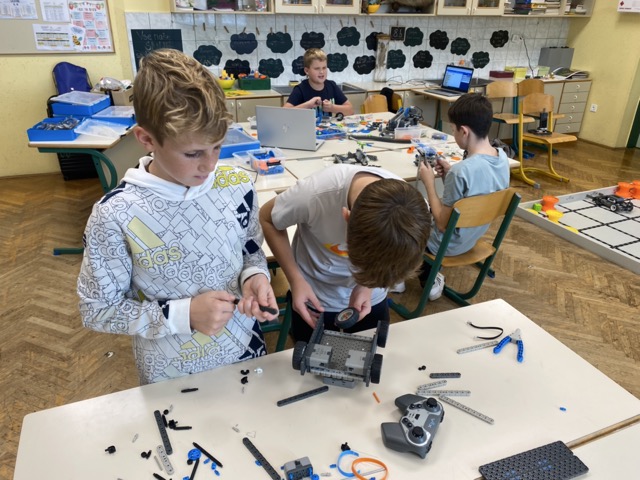
VEX Robotics is not just about building robots; it’s a comprehensive educational ecosystem designed to immerse students in hands-on STEM learning. Here’s what makes VEX Robotics stand out:
1. Hands-On Learning: Students learn by doing, applying theoretical concepts to real-world challenges.
2. Scalability: VEX offers solutions for all ages, from elementary school through university.
3. Comprehensive Curriculum: VEX provides educators with standards-aligned curriculum resources.
4. Competition Ecosystem: VEX Robotics competitions provide goals and motivation for students.
5. Accessibility: With various entry points, VEX makes robotics accessible to students of all backgrounds and skill levels.
Now, let’s explore how VEX Robotics can be used to teach core STEM concepts, empowering the innovators of tomorrow.
Science: Bringing Theories to Life
Science education often suffers from a perceived disconnect between theory and practice. VEX Robotics bridges this gap, allowing students to see scientific principles in action.
Physics in Motion
Building and operating robots provides a tangible way to explore physics concepts:
1. Forces and Motion: Students experience Newton’s laws firsthand as they design robots to push, pull, and lift objects.
2. Energy Transfer: Concepts like potential and kinetic energy come to life as robots convert electrical energy into mechanical motion.
3. Simple Machines: Gears, levers, and pulleys are integral to robot design, making these concepts tangible.
Classroom Idea: Have students design a robot to launch a projectile. They’ll need to consider concepts like trajectory, force, and air resistance.
Electricity and Circuits
Robotics provides an engaging way to teach electrical concepts:
1. Circuit Design: Students learn about series and parallel circuits as they wire their robots.
2. Voltage and Current: Choosing the right motors and power sources introduces these concepts practically.
3. Sensors and Signals: Using sensors to control robot behavior introduces students to signal processing.
Classroom Idea: Challenge students to design a robot that can follow a line using light sensors, introducing concepts of reflection and absorption.
Technology: Coding and Beyond
In our digital age, technological literacy is crucial. VEX Robotics offers a comprehensive platform for teaching various aspects of technology.
Programming Fundamentals
VEX Robotics uses a block-based programming language for beginners, which can later transition to text-based languages:
1. Logical Thinking: Programming robots encourages students to think in logical, step-by-step sequences.
2. Debugging Skills: When programs don’t work as expected, students develop crucial debugging skills.
3. Computational Thinking: Students learn to break down complex tasks into simpler, programmable steps.
Classroom Idea: Start with simple programs to make the robot move in geometric shapes, then progress to more complex behaviors like obstacle avoidance.
Human-Computer Interaction
As students design robot controls, they’re introduced to principles of user interface design:
1. Usability: Students learn to create intuitive controls for their robots.
2. Feedback Systems: Implementing LED indicators or sounds for robot status teaches about user feedback.
3. Accessibility: Discussions about making robot controls accessible introduce important design considerations.
Classroom Idea: Challenge students to design a robot control system for users with limited mobility, encouraging them to think about diverse user needs.
Engineering: Design Thinking in Action
Engineering is all about solving problems, and VEX Robotics provides a perfect platform for budding engineers to hone their skills.
The Engineering Design Process
VEX Robotics naturally follows the engineering design process:
1. Define the Problem: Students start with a clear challenge or goal for their robot.
2. Research: They investigate possible solutions and learn from existing designs.
3. Brainstorm: Teams come up with multiple ideas for their robot design.
4. Choose a Solution: Students select the most promising design to pursue.
5. Build a Prototype: Using VEX components, students bring their design to life.
6. Test and Evaluate: Robots are put through their paces in various challenges.
7. Iterate and Improve: Based on test results, students refine their designs.
This process teaches students that engineering is iterative and that failure is a stepping stone to success.
Classroom Idea: Organize an “Engineering Showcase” where student teams present their robot designs to a panel of judges (which could include teachers or older students). Each team gives a short presentation explaining their design process, the challenges they faced, and how they overcame them. The judges can ask questions and provide feedback, simulating a real-world engineering review process. This activity not only reinforces the engineering design process but also helps students develop presentation and communication skills crucial in STEM fields.
Mechanical Engineering Principles
Building robots introduces students to key mechanical engineering concepts:
1. Structural Integrity: Students learn about stability and support as they build robot frames.
2. Gear Ratios: Choosing the right gears for speed or torque introduces mechanical advantage.
3. Linkages and Mechanisms: Creating robot arms and grippers explores kinematics.
Classroom Idea: Challenge students to design a robot that can climb stairs, forcing them to grapple with concepts of balance, traction, and power.
Mathematics: Applied Numeracy
Mathematics often suffers from a reputation of being abstract and disconnected from real life. VEX Robotics makes math tangible and applicable.
Geometry in Robot Design
Designing and building robots is an exercise in applied geometry:
1. Spatial Reasoning: Planning robot structures develops 3D thinking skills.
2. Symmetry and Balance: These concepts are crucial for stable robot design.
3. Angles and Rotations: Programming robot movements requires understanding of angles and rotations.
Classroom Idea: Have students design a robot to navigate a maze, requiring them to calculate turns and distances precisely.
Algebra in Robot Programming
Programming introduces algebraic thinking in a practical context:
1. Variables: Students use variables to store sensor readings or control motor speeds.
2. Functions: Creating reusable code introduces the concept of functions.
3. Inequalities: Programmed behaviors often rely on inequalities (e.g., “if distance < 10 cm, then stop”).
Classroom Idea: Challenge students to create a “Smart Sorter” robot. The robot should be able to sort objects of different sizes into separate containers. Students will need to use algebraic concepts to program the robot.
Beyond STEM: Cultivating 21st Century Skills
While STEM skills are at the core of VEX Robotics, the platform also nurtures crucial soft skills that are essential for future innovators:
Teamwork and Communication
Most VEX Robotics activities are team-based, fostering important interpersonal skills:
1. Collaboration: Students learn to work together towards a common goal.
2. Role Allocation: Teams must decide who does what, introducing project management concepts.
3. Conflict Resolution: Disagreements over design choices teach negotiation skills.
Classroom Idea: Assign specific roles (e.g., lead programmer, chief engineer, project manager) to team members, rotating these roles for different projects.
Critical Thinking and Problem-Solving
The challenges inherent in robotics nurture critical thinking:
1. Analytical Skills: Students learn to break down complex problems into manageable parts.
2. Creative Problem-Solving: Unique challenges require innovative solutions.
3. Decision Making: Limited resources (time, materials) force students to make strategic decisions.
Classroom Idea: Present students with a “broken” robot and challenge them to diagnose and fix the problem.
Resilience and Growth Mindset
The iterative nature of robotics teaches important life lessons:
1. Embracing Failure: Students learn that failure is a part of the learning process.
2. Perseverance: Complex challenges teach students to persist in the face of difficulties.
3. Continuous Improvement: The iterative design process instills a growth mindset.
Classroom Idea: Maintain a “failure log” where students document their setbacks and what they learned, promoting a positive view of failure.
Implementing VEX Robotics in Your Classroom
Excited about the potential of VEX Robotics? Here’s how you can get started:
Starting Small
You don’t need to overhaul your entire curriculum overnight:
1. After-School Club: Start with an extracurricular robotics club to gauge interest.
2. Single-Class Integration: Begin by incorporating robotics into a single unit or class.
3. Collaborative Approach: Partner with other teachers to integrate robotics across subjects.
Leveraging Available Resources
VEX Robotics provides extensive resources for educators:
1. Curriculum Guides: Standards-aligned lessons are available for various grade levels.
2. Professional Development: VEX offers training for teachers new to robotics.
3. Online Community: Connect with other educators to share ideas and best practices.
Creating an Inclusive Environment
Ensure your robotics program is welcoming to all students:
1. Gender Inclusivity: Actively encourage participation from all genders.
2. Diverse Teams: Create teams with mixed skill levels and backgrounds.
3. Multiple Entry Points: Offer both competitive and non-competitive robotics activities.
The Future of STEM Education: VEX Robotics and Beyond
As we look to the future, it’s clear that platforms like VEX Robotics will play an increasingly important role in STEM education:
Preparing for Future Careers
Many of the jobs our students will hold don’t even exist yet. VEX Robotics prepares them by:
1. Fostering Adaptability: Students learn to tackle unfamiliar challenges.
2. Encouraging Innovation: The platform nurtures the creative problem-solving skills needed for innovation.
3. Building Technical Literacy: Even in non-STEM fields, basic technical literacy is becoming crucial.
Addressing Global Challenges
The complex problems facing our world require STEM solutions:
1. Environmental Issues: Future innovators may design robots for ocean cleanup or reforestation.
2. Healthcare: Robotics is already revolutionizing medicine, a trend likely to continue.
3. Space Exploration: As we look to the stars, robotics will play a crucial role.
By engaging with VEX Robotics, students are taking their first steps towards tackling these global challenges.
Evolving Educational Paradigms
VEX Robotics represents a shift in how we approach education:
1. Hands-On Learning: Moving away from rote memorization to experiential learning.
2. Interdisciplinary Approach: Breaking down silos between different subjects.
3. Lifelong Learning: Instilling a passion for continuous learning and adaptation.
Conclusion: Empowering the Innovators of Tomorrow
In a world of rapid technological change, empowering our students with STEM skills is not just an educational imperative – it’s a necessity for their future success. VEX Robotics offers a unique and powerful platform to achieve this goal, making abstract STEM concepts tangible, fostering critical 21st-century skills, and igniting a passion for innovation.
As educators, parents, and mentors, we have the privilege and responsibility to guide the next generation of innovators. By embracing platforms like VEX Robotics, we’re not just teaching science, technology, engineering, and math – we’re empowering students to shape the future.
The robots our students build today may seem simple, but they represent so much more. They’re building blocks for future innovations, stepping stones to solving global challenges, and foundations for lifelong learning. In the hands of a child today, a VEX robot might just be the first step towards a breakthrough that changes the world tomorrow.
So, let’s embrace this powerful tool. Let’s bring the excitement of robotics into our classrooms, after-school programs, and homes. Let’s empower our future innovators with the skills, knowledge, and mindset they need to thrive in the world of tomorrow. With VEX Robotics, we’re not just teaching STEM – we’re launching the next generation of innovators, one robot at a time.
The future is built by those who have the tools to shape it. With VEX Robotics, we’re putting those tools directly into the hands of our students. And that, perhaps, is the most exciting innovation of all.